Block paving driveways in Bath
Block paving is Bath's most popular driveway surface: £70 to £120/m² installed, endlessly repairable, and available in sett-style and muted blends that sit well alongside Bath stone. A typical two-car drive totals £3,400 to £6,000.
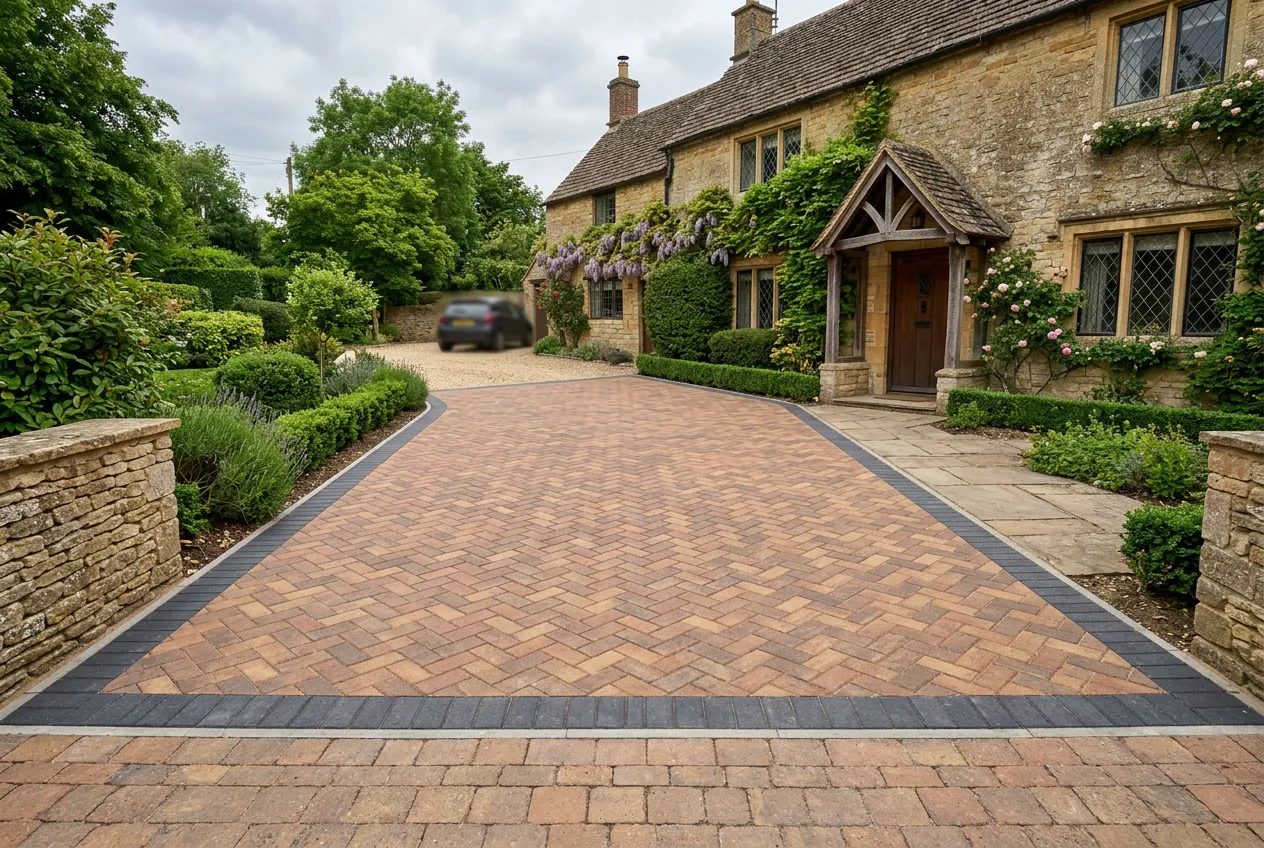
Why block paving suits Bath
Block paving is individual concrete or clay blocks laid on a screeded sand bed over a compacted sub-base. Its strength is its flexibility: hundreds of colour and pattern combinations, from modern charcoal herringbone to traditional sett styles that echo the cobbled look of Bath's older streets. On a city of period property, that matters: a tumbled, multi-sized block in a brindle or buff blend reads as traditional rather than suburban.
What it costs in Bath
£70 to £120/m² supplied and laid, so a 50m² two-car drive runs £3,400 to £6,000. Standard concrete blocks sit at the lower end; clay pavers, natural stone setts and intricate patterns with contrasting borders push towards the top. Most Bath quotes include a soldier-course border in a contrasting colour, which frames the drive and protects the edges.
Patterns and the Bath look
- Herringbone (45° or 90°), the strongest interlock and the default for driveways taking turning cars.
- Stretcher bond, simple and contemporary, best on straight runs.
- Sett-style or tumbled blocks, the period look for Georgian and Victorian frontages around Bathwick, Widcombe and Larkhall.
- Permeable blocks, same look, but built to let water drain through the joints, sidestepping the 5m² front-garden planning rule entirely.
Built properly or not at all
Block paving failures are almost always sub-base failures: sinking wheel tracks and spreading edges mean the ground underneath was skimped. A proper Bath job means 150 to 200mm of compacted MOT Type 1 (more on sloping or made ground), solid edge restraints haunched in concrete, and kiln-dried sand vibrated into the joints. Any quote that does not state excavation depth and sub-base thickness should be queried.
Lifespan and maintenance
20 to 30 years. Individual blocks lift and relay easily, so repairs around drain covers or after utility work are cheap. An annual weed-and-sand top-up keeps the joints tight, and a re-sand and seal every few years keeps the colour.